

 Zehranur Ertek
Researcher
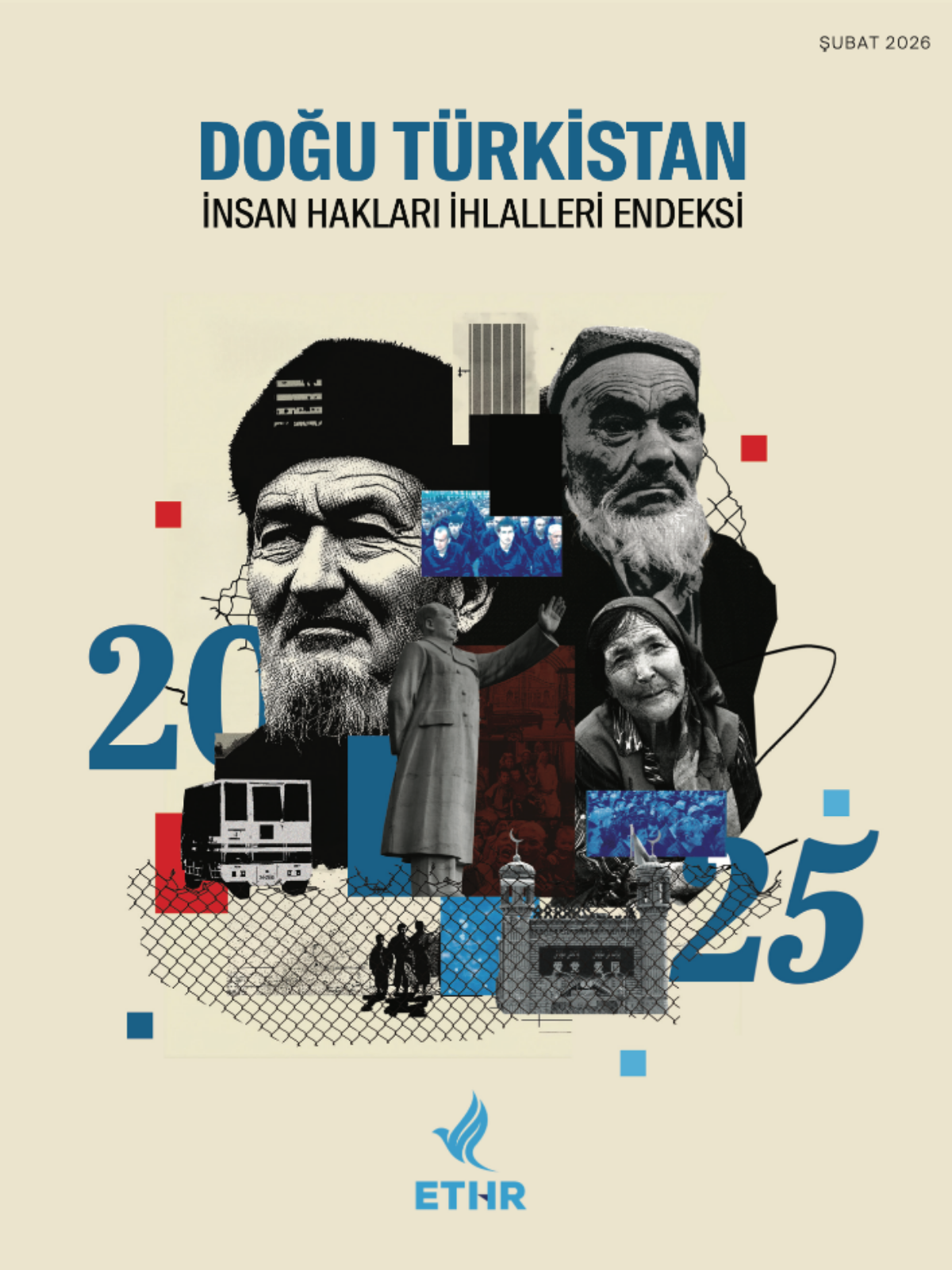
The report was published on 16 February 2026 and was presented to the public at a launch event held in Istanbul on the same day. The study examines the human rights violations documented throughout 2025 under 14 different categories.
The “Human Rights Violations Index in East Turkistan 2025,” prepared by the East Turkistan Human Rights Watch Association (ETHR), provides a systematic, comparative and data-driven assessment of the human rights violations that occurred in East Turkistan throughout 2025. The report aims to demonstrate that the repressive policies implemented in the region are not merely isolated incidents, but components of an institutional system maintained through political, legal, economic, technological and social mechanisms.
The Chinese authorities’ extensive censorship policies, restrictions on access to East Turkistan for independent observers and strict control over the flow of information make it extremely difficult to document the violations taking place in the region. Despite this highly restricted information environment, ETHR conducted systematic monitoring throughout 2025, bringing together developments gathered from various sources and seeking to reveal the nature, intensity and evolution of human rights violations over the course of the year.
Within the scope of the Index, human rights violations in East Turkistan were evaluated under 14 thematic categories. Arbitrary detention and imprisonment, violations of the right to a fair trial, restrictions on freedom of religion and belief, forced labour, digital surveillance, limitations on freedom of expression, violations of children’s rights and transnational repression targeting Uyghurs living outside East Turkistan are among the prominent issues addressed in the report.
During the preparation of the report, open-source research was conducted in five languages: Arabic, Chinese, English, Turkish and Uyghur. Developments identified throughout the year were classified on a monthly basis, information obtained from different sources was cross-checked and the progression of violations over time was examined. Through this methodology, the report seeks not only to list individual incidents, but also to reveal the connections between different forms of abuse and the continuing nature of the repressive policies.
The study covers a wide range of issues, from arbitrary detention in internment camps and prisons to the transfer of Uyghurs into state-sponsored labour programmes; from restrictions on religious worship and cultural practices to the separation of children from their families and national identity. The use of artificial intelligence-assisted surveillance systems, facial recognition technologies, big-data applications and digital tracking mechanisms to control social life is also addressed in the report as a serious threat to fundamental human rights.
The Index does not assess human rights violations in East Turkistan solely through numerical data. It also examines the significance of these practices under international human rights law. The cases and findings presented in the report are evaluated within the framework of international conventions and legal standards concerning the protection of fundamental rights and freedoms, drawing attention to the legal, political and social dimensions of the violations.
In this respect, the “Human Rights Violations Index in East Turkistan 2025” serves as an important reference source for researchers, legal professionals, journalists, civil society organisations, policymakers and international institutions. The study is intended to provide reliable data for future academic research, legal initiatives, advocacy efforts and submissions to national and international institutions.
Through this report, ETHR seeks to prevent the human rights violations in East Turkistan from being forgotten or normalised, to amplify the voices of the victims and to call upon the international community to assume concrete responsibility. The protection of human rights is not merely the concern of a particular people or region, but a shared responsibility of all humanity. Silence must not be maintained in the face of the continuing violations in East Turkistan; independent investigation and monitoring mechanisms must be supported, and accountability for those responsible must be ensured.